
Stem Cell Therapy
for Kidney
Disease — $1,999
Watching your GFR drop with nothing to do but wait — that's the reality of CKD. MSC stem cells target the inflammation and fibrosis destroying your remaining kidney tissue. Not a cure. A fight to protect what's left.
The Hardest Part of CKD: Watching the Numbers Drop With Nothing to Do
If you have chronic kidney disease, you know the routine. Lab work every few months. Watch your GFR number decline. Your nephrologist adjusts blood pressure meds, manages symptoms, and tells you to limit protein and sodium. But nothing stops the slide.
That's because the underlying drivers — chronic inflammation and progressive fibrosis — aren't addressed by conventional CKD management. Your kidneys are under constant inflammatory assault, and scar tissue progressively replaces functional nephrons.
MSC stem cells target both of these drivers directly. They don't regenerate destroyed nephrons — but they fight to protect the nephrons you still have from the inflammation and scarring that's destroying them.
The Stages of Kidney Decline — and Where MSCs Can Help Most
CKD is staged by GFR (glomerular filtration rate) — how much blood your kidneys filter per minute. Earlier intervention means more nephrons to protect.
CKD Stages by GFR
Each stage represents less functional kidney tissue. The goal: slow this progression.
How MSCs Protect Remaining Kidney Function
MSCs address the two primary drivers of nephron loss — chronic inflammation and progressive fibrosis — while supporting the remaining functional tissue.
Reduce Renal Inflammation
Chronic inflammation in kidney tissue drives progressive nephron damage. MSCs secrete anti-inflammatory cytokines (IL-10, TGF-β, PGE2) that calm this inflammatory environment — reducing the ongoing assault on your remaining functional kidney tissue.
Anti-Fibrotic Protection
Kidney fibrosis — scar tissue replacing functional nephrons — is the final common pathway of CKD regardless of cause. MSCs secrete anti-fibrotic factors (HGF, BMP-7 signaling) that slow fibrotic remodeling, the most critical mechanism for kidney preservation.
Tubular Cell Protection
MSCs provide anti-apoptotic (anti-cell-death) signals that protect renal tubular cells from inflammatory and oxidative damage. This direct cytoprotection helps preserve the functional cells that perform the kidney's filtration work.
Restore Renal Microvasculature
Kidney function depends on an incredibly dense network of tiny blood vessels. CKD progressively destroys this microvascular network. MSCs promote angiogenesis — new vessel formation — supporting blood flow to surviving nephrons.
Immune Modulation
Many forms of CKD involve dysregulated immune activity — from autoimmune nephritis to diabetic nephropathy's inflammatory component. MSCs modulate the immune response, shifting from tissue-destructive to tissue-protective activity within the kidney.
Paracrine Renal Signaling
MSCs release exosomes containing anti-inflammatory RNA and proteins that reprogram kidney cells toward repair. These paracrine effects persist long after MSCs clear, providing sustained benefit — especially important for the kidney's complex cellular environment.
📋 Where the Research Stands
MSC therapy for kidney disease is an active area of clinical research with multiple published studies showing reduced proteinuria, improved GFR stability, and reduced inflammatory markers. Several clinical trials specifically in diabetic nephropathy and IgA nephropathy have shown encouraging results. However, stem cell therapy is not FDA-approved for CKD or any kidney condition. Destroyed nephrons cannot be regenerated. The goal is protection of remaining function, not reversal. We discuss the specific evidence for your type of kidney disease during consultation.
Kidney Conditions Explored in MSC Research
CKD has many causes — each with different inflammatory and fibrotic profiles that MSCs may address.
Diabetic Nephropathy
The most common cause of CKD. Chronic hyperglycemia damages glomeruli through inflammation, oxidative stress, and fibrosis. MSCs address all three pathways. The most studied renal application for stem cells.
Strong ResearchHypertensive Nephrosclerosis
Chronic high blood pressure damages the kidney's delicate blood vessels. MSCs' vascular repair and anti-fibrotic properties help protect against ongoing hypertensive damage alongside blood pressure management.
Promising ResearchIgA Nephropathy
Autoimmune-driven kidney inflammation — immune complexes deposit in glomeruli and trigger progressive damage. MSCs' immune modulation is especially relevant here, calming the autoimmune attack on kidney tissue. See autoimmune page →
Promising ResearchLupus Nephritis
Kidney involvement in systemic lupus — one of the most dangerous lupus complications. MSC therapy has been specifically studied in lupus nephritis with some of the most encouraging results in the MSC-kidney research literature.
Strong ResearchPolycystic Kidney Disease (PKD)
Genetic condition with cyst formation. While MSCs can't address the genetic driver, their anti-inflammatory and anti-fibrotic effects may help manage the secondary inflammation and fibrosis that accelerate functional decline.
Early ResearchChronic Glomerulonephritis
Various forms of glomerular inflammation that progressively impair kidney function. The inflammatory and immune-mediated nature of glomerulonephritis makes it a logical target for MSC immune modulation therapy.
Promising ResearchContinue All Kidney Medications
MSC therapy complements your nephrologist's treatment plan — it does not replace it. Never stop or adjust ACE inhibitors, ARBs, diuretics, phosphate binders, ESAs, sodium bicarbonate, or any prescribed kidney medications without your doctor's explicit guidance. CKD management requires careful medication coordination.
Track It With Numbers, Not Just Hope
One of the advantages of kidney disease: it's objectively measurable. Unlike many conditions where you're guessing about improvement, kidney function is tracked with precise lab markers.
We recommend comprehensive baseline labs before treatment and follow-up testing at 3 and 6 months. This gives you — and your nephrologist — real data to evaluate treatment response, not just subjective feelings.
GFR
Glomerular filtration rate — your kidney's overall filtering capacity. The single most important number.
Creatinine
Waste product filtered by kidneys. Rising levels indicate declining function.
UACR / Proteinuria
Protein leaking into urine. Indicates glomerular damage and disease activity.
CRP / ESR
Inflammatory markers. Helps track whether the inflammatory fire is cooling.
Share Your Results With Your Nephrologist
We encourage you to share all treatment information and lab results with your kidney doctor. CKD management requires a coordinated team. We're not replacing your nephrologist — we're adding a tool to your arsenal that addresses inflammation and fibrosis in ways conventional medications can't.
Kidney Support Without the Financial Kidney Punch
CKD already costs patients thousands annually. Dialysis costs average $90,000 per year. Every month you can delay that through nephron protection has enormous financial — and quality of life — value.
Your Path to Kidney Protection
CKD patients require careful coordination with existing nephrology care. Here's our process.
Free Consultation (Phone or Zoom)
Tell us about your kidney disease — CKD stage, most recent GFR, underlying cause (diabetes, hypertension, autoimmune), and current medications. We explain the research specific to your condition and set realistic expectations. If we don't think MSC therapy is appropriate, we'll tell you. 15 minutes, free, no obligation.
Medical Review & Baseline Labs
Andrea Montana, MSN, APRN reviews your complete renal history — labs, imaging, biopsy results if available, medication list, and comorbidities. We recommend comprehensive baseline labs (GFR, creatinine, UACR, BUN, CRP, CBC) before treatment so we have clear data points for comparison. We coordinate with your nephrologist as appropriate.
IV Stem Cell Infusion
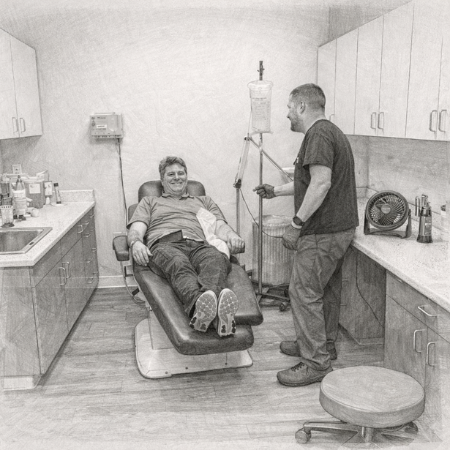
A comfortable 1–2 hour IV infusion. 40 million young MSCs delivered systemically — traveling to kidney tissue to deliver anti-inflammatory and anti-fibrotic support. No surgery, no sedation, no downtime. Return to normal activities immediately. Hydration is encouraged before and after treatment.
Lab Monitoring & Ongoing Support
Follow-up labs at 3 and 6 months to objectively track GFR, creatinine, proteinuria, and inflammatory markers. This gives you real data on treatment response — not guesswork. We recommend treatments every 6 months for sustained nephroprotection, with lab tracking creating an ongoing picture of kidney function trajectory.
Questions from CKD Patients
Protect What's Left — Starting With an Honest Conversation
Tell us about your kidney disease and we'll give you a straight answer about whether MSC therapy can help your specific situation. No overpromising. No sales pressure. Just honest assessment based on your labs and staging.
- ✔ Free 15-minute phone or Zoom consultation
- ✔ Review your CKD stage, GFR, and current treatment
- ✔ Discuss research specific to your kidney condition
- ✔ Coordinate with your nephrologist's care plan
- ✔ Know the exact price upfront: $1,999
Learn More
Every Nephron You Protect Is a Month You Stay Off Dialysis.
Schedule a free consultation and learn how MSC stem cell therapy can help protect your remaining kidney function — with real lab data to prove it.
Stem cell therapy is not FDA-approved for the diagnosis, treatment, cure, or prevention of any disease, including chronic kidney disease, diabetic nephropathy, or any renal condition. Stem cell therapy cannot cure kidney disease or regenerate destroyed nephrons. Individual results vary significantly. The information on this page is for educational purposes only and does not constitute medical advice. Do not stop or modify prescribed medications — including ACE inhibitors, ARBs, diuretics, phosphate binders, or any kidney-related prescriptions — without consulting your nephrologist or prescribing physician. A consultation with our medical team is required to determine treatment appropriateness.
Stem Cell Therapy in Fairhope, Alabama — $1,999
Premium umbilical cord MSC stem cell therapy on the Eastern Shore at a price that makes sense. Same cells other clinics sell for $15,000. No hidden fees. No sales pressure. Just honest medicine.
The Eastern Shore's Premier Stem Cell Clinic
Fairhope's charm is rooted in an active, outdoor lifestyle — fishing Mobile Bay, walking the bluffs, golfing year-round, and enjoying the Gulf Coast. But that beautiful life takes a toll on joints, backs, and bodies over time. Most stem cell clinics in Alabama charge $10,000–$25,000 and hide pricing behind consultations. We don't.
Stem Cell Therapy for the Eastern Shore Lifestyle
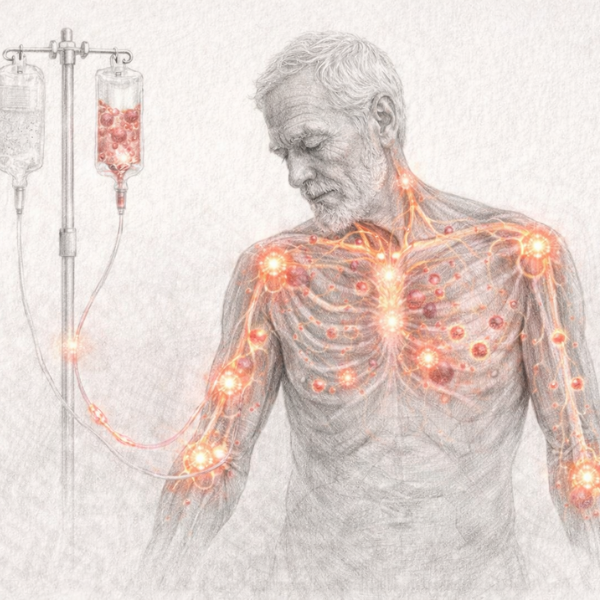
From Gulf Coast anglers to weekend golfers, our patients come to us when they want an alternative to surgery and pain medications.
Knee & Joint Pain
Years of Gulf Coast living — fishing, boating, walking the pier — wear down joints. MSC stem cells help reduce inflammation and support natural healing.
Learn moreOsteoarthritis
Humidity and years of activity can accelerate cartilage wear. Umbilical cord MSC therapy can help calm inflammation and support your body's own repair mechanisms.
Learn moreBack Pain
Whether it's from hauling in a catch, swinging a golf club, or just everyday life, back pain is common on the Gulf Coast. Stem cells target inflammation in spinal tissues.
Learn moreSports Injuries
From Fairhope Pier running to Orange Beach kayaking, Baldwin County stays active. MSC therapy helps active adults recover faster and stay in the game.
Learn moreWellness & Longevity
Health-conscious Eastern Shore residents use stem cell therapy to reduce systemic inflammation and support long-term vitality as part of their wellness routine.
Learn moreFrailty of Aging
Baldwin County retirees choose MSC therapy to help manage age-related inflammation, support mobility, and maintain the active Gulf Coast lifestyle they love.
Learn moreSame Stem Cells. Different Price.
Why do other Alabama clinics charge $10,000–$25,000? Luxury overhead, commissioned salespeople, and massive markups. We skip all of that.
Your Fairhope Stem Cell Treatment in 4 Steps
Free Consultation
Talk with our team by phone or Zoom. We'll review your health history, discuss your goals, and determine if stem cell therapy is right for your specific situation. About 15 minutes — no pressure, no sales pitch.
Schedule Your Treatment
If approved, book your appointment at our Fairhope clinic at a time that works for you. We'll send prep instructions so you know exactly what to expect.
Receive Your Stem Cells
Your MSC stem cell therapy is administered via IV or targeted injection depending on your condition. The procedure takes 1–2 hours in our clinical setting with full physician oversight. Go home same day.
Follow Up & Return
We'll monitor your progress and stay in touch. Most Fairhope members return every 6 months as part of their ongoing wellness plan — making stem cells a routine, not a one-time emergency.
Serving Baldwin County & the Gulf Coast
Our Fairhope clinic is centrally located for patients across the Eastern Shore, Gulf Shores, and the greater Mobile area.
What Eastern Shore Patients Say
Real patients. Real results. Individual outcomes vary.
Individual results vary. These reflect personal experiences, not guaranteed outcomes.
Our Fairhope Clinic
Fairhope, AL
Full address coming soon — call for details
Office Hours
Frequently Asked Questions
Ready to See If Stem Cells Are Right for You?
Schedule a free consultation with our Fairhope team. No pressure, no obligation — just honest answers about whether stem cell therapy makes sense for your situation.
The Eastern Shore Deserves Better Stem Cell Pricing
Join Baldwin County patients who've chosen transparent, physician-guided stem cell therapy at a fair price. Same quality MSCs. No markup games.
Stem cell therapy is not FDA-approved for the diagnosis, treatment, cure, or prevention of any disease. Individual results vary. The information on this page is for educational purposes only and does not constitute medical advice. A consultation with our medical team is required to determine treatment appropriateness.