Stem Cell Therapy
for COPD & Lung
Disease — $1,999
COPD is driven by relentless lung inflammation. Inhalers and steroids manage symptoms but can't stop the fire. MSC stem cells deliver the most potent natural anti-inflammatory response studied in pulmonary medicine — targeting the inflammation destroying your lungs.
COPD Has No Cure. But It Can Be Slowed — and Quality of Life Can Improve.
We want to be upfront: no treatment — including stem cell therapy — can cure COPD or reverse destroyed lung tissue. Once alveoli are gone, they're gone.
But COPD isn't just about damage that's already happened. It's about the ongoing inflammatory destruction that continues every day, progressively stealing your breathing capacity. Every conventional treatment you're using — inhalers, bronchodilators, corticosteroids — manages symptoms of this inflammation without stopping it.
MSC stem cells are the most potent anti-inflammatory cell therapy studied in pulmonary medicine. They don't rebuild destroyed lungs — they fight the fire that's destroying what's left.
The Inflammatory Destruction Cycle of COPD
COPD isn't a single event — it's a self-perpetuating cycle of inflammation and tissue damage. Breaking this cycle is the key.
The COPD Destruction Loop
Each step feeds the next. MSCs intervene at the root — the inflammatory response itself.
How MSCs Work in the Lungs
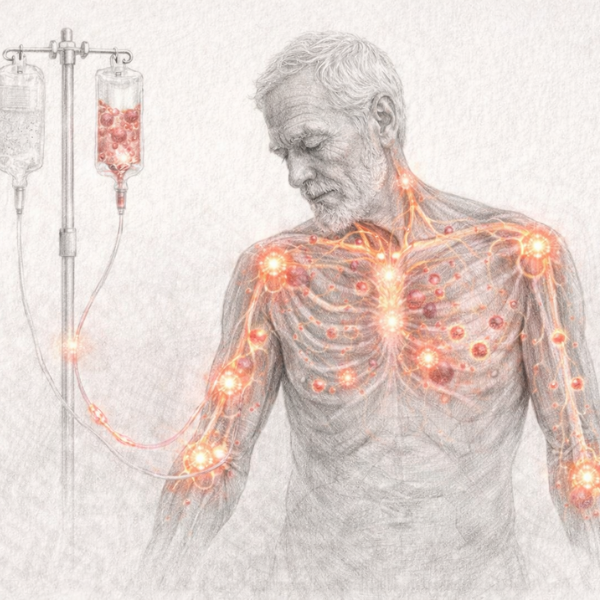
IV-delivered MSCs have a natural affinity for lung tissue — they concentrate in the pulmonary vasculature, putting them exactly where COPD patients need them most.
Reduce Pulmonary Inflammation
MSCs secrete IL-10, TGF-β, and PGE2 — potent anti-inflammatory molecules that calm the chronic inflammatory response in lung tissue. This is the primary mechanism: reducing the fire that drives COPD progression and tissue destruction.
Modulate Immune Response
COPD involves dysfunctional immune activity — neutrophils and macrophages chronically activated in the lungs. MSCs shift these immune cells from destructive (M1) to reparative (M2) activity, reducing the immune-mediated tissue damage.
Anti-Fibrotic Properties
Lung fibrosis (scarring) progressively stiffens airways and reduces function. MSCs secrete anti-fibrotic factors that may slow the fibrotic remodeling of lung tissue — particularly relevant for patients with pulmonary fibrosis or fibrotic COPD components.
Pulmonary Vascular Support
COPD damages the pulmonary blood vessels that enable gas exchange. MSCs promote endothelial repair and new blood vessel formation, potentially improving oxygen transfer in remaining lung tissue.
Antimicrobial Support
MSCs have direct antimicrobial properties — they secrete antimicrobial peptides (LL-37) that help fight bacterial infections. For COPD patients, who are highly vulnerable to respiratory infections and exacerbations, this adds a layer of protection.
Paracrine Lung Signaling
MSCs release exosomes packed with anti-inflammatory RNA and proteins that reprogram lung cells toward repair. These exosome effects persist long after the MSCs themselves have cleared, providing sustained therapeutic benefit.
IV Delivery — Ideal for Lung Conditions
Here's something most people don't know: when MSCs are delivered via IV, they naturally concentrate in the lung vasculature during their first pass through the circulatory system. This "pulmonary first-pass effect" means IV delivery puts MSCs exactly where lung patients need them — making IV infusion particularly well-suited for pulmonary conditions.
📋 Honest About Lung Disease
The anti-inflammatory properties of MSCs in lung tissue are well-documented in clinical research, including multiple COPD-specific clinical trials. However, stem cell therapy is not FDA-approved for COPD or any lung disease. Destroyed alveoli cannot be regenerated. MSC therapy aims to reduce ongoing inflammatory damage, potentially slow progression, reduce exacerbation frequency, and improve quality of life — not to cure or reverse COPD. We discuss realistic expectations during consultation.
Lung Conditions Explored in MSC Research
The anti-inflammatory and immunomodulatory mechanisms of MSCs are relevant across multiple chronic lung diseases.
COPD — Emphysema
Destruction of alveolar walls reduces gas exchange surface area. MSCs can't rebuild destroyed alveoli but can reduce the inflammation driving ongoing destruction and support remaining tissue. The most studied lung condition in MSC research.
Strong ResearchCOPD — Chronic Bronchitis
Chronic airway inflammation with mucus overproduction and persistent cough. MSCs' anti-inflammatory effects target the airway inflammation directly, potentially reducing mucus production and improving airflow.
Strong ResearchPulmonary Fibrosis (IPF)
Progressive scarring of lung tissue with limited treatment options. MSCs' anti-fibrotic properties may help slow fibrotic progression. IPF patients often face poor prognosis — any intervention that slows progression is significant.
Promising ResearchSevere Asthma
Chronic airway inflammation with remodeling that doesn't respond adequately to conventional treatment. MSCs' immune modulation may help rebalance the inflammatory response in treatment-resistant asthma.
Promising ResearchPost-COVID Lung Damage
Persistent lung inflammation and fibrosis following severe COVID-19. MSCs were extensively studied during the pandemic for acute COVID lung injury — the anti-inflammatory rationale extends to post-COVID pulmonary complications.
Promising ResearchBronchiectasis
Chronic inflammatory condition with damaged, widened airways prone to infection. MSCs' combined anti-inflammatory and antimicrobial properties make them theoretically well-suited, though clinical evidence is still emerging.
Early ResearchImportant: Continue All Prescribed Medications
MSC therapy is designed to complement your current treatment plan — not replace it. Never stop inhalers, bronchodilators, corticosteroids, oxygen therapy, or any prescribed medications without your pulmonologist's explicit guidance. Abruptly stopping COPD medications can trigger dangerous exacerbations.
What COPD Patients Commonly Report
Results vary significantly by COPD stage, underlying conditions, and individual response. We share these outcomes honestly — as commonly reported improvements, not guarantees. Earlier-stage COPD generally responds better.
Pulmonary Support Without the Financial Burden
COPD already costs patients thousands annually in medications, oxygen, and specialist care. Regenerative support shouldn't require a second mortgage.
Your Path to Breathing Support
We take extra care with lung patients — COPD involves complex medical management that we coordinate around.
Free Consultation (Phone or Zoom)
Tell us about your diagnosis — COPD stage, current medications, oxygen use, exercise limitations, and exacerbation frequency. We explain what the research shows for your specific situation and set realistic expectations. We'll be honest if we don't think MSC therapy is appropriate for your case. 15 minutes, free, no obligation.
Comprehensive Medical Review
Andrea Montana, MSN, APRN reviews your full pulmonary history — spirometry results, imaging, current medication regimen, oxygen requirements, and comorbidities. We coordinate with your existing pulmonary care team to ensure MSC therapy complements your treatment plan safely. We may recommend baseline pulmonary function testing for comparison.
IV Stem Cell Infusion
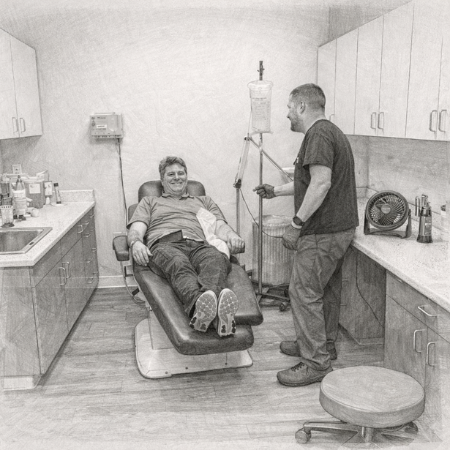
A comfortable 1–2 hour IV infusion. 40 million young MSCs delivered systemically — naturally concentrating in your lung vasculature during their first circulatory pass. For patients on supplemental oxygen, we ensure continuous support throughout treatment. No surgery, no sedation, minimal downtime.
Progressive Pulmonary Support
Anti-inflammatory effects begin working immediately, but the full benefit develops over weeks. Most patients notice breathing improvements within 4–8 weeks, with peak benefits around 3–4 months. We recommend treatments every 6 months for sustained anti-inflammatory support. Follow-up pulmonary function testing at 3 months can help quantify improvement.
Questions from Lung Disease Patients
Breathe a Little Easier — Starting With an Honest Conversation
Tell us about your lung condition and we'll give you a straight answer about what MSC therapy can and can't do. No overpromising. No sales pressure. Just an honest assessment.
- ✔ Free 15-minute phone or Zoom consultation
- ✔ Discuss your COPD stage and current treatment
- ✔ Coordinate with your pulmonary care team
- ✔ Realistic expectations — not sales promises
- ✔ Know the exact price upfront: $1,999
Learn More
Your Lungs Are Still Fighting. Give Them Reinforcements.
Schedule a free consultation and learn how MSC stem cell therapy can support your remaining lung tissue — honestly, affordably, and without overpromising.
Stem cell therapy is not FDA-approved for the diagnosis, treatment, cure, or prevention of any disease, including COPD, emphysema, pulmonary fibrosis, or any lung condition. Stem cell therapy cannot cure COPD or regenerate destroyed lung tissue. Individual results vary significantly. The information on this page is for educational purposes only and does not constitute medical advice. Do not stop or modify prescribed medications — including inhalers, bronchodilators, corticosteroids, or oxygen therapy — without consulting your prescribing physician or pulmonologist. A consultation with our medical team is required to determine treatment appropriateness.
Stem Cell Therapy in Fairhope, Alabama — $1,999
Premium umbilical cord MSC stem cell therapy on the Eastern Shore at a price that makes sense. Same cells other clinics sell for $15,000. No hidden fees. No sales pressure. Just honest medicine.
The Eastern Shore's Premier Stem Cell Clinic
Fairhope's charm is rooted in an active, outdoor lifestyle — fishing Mobile Bay, walking the bluffs, golfing year-round, and enjoying the Gulf Coast. But that beautiful life takes a toll on joints, backs, and bodies over time. Most stem cell clinics in Alabama charge $10,000–$25,000 and hide pricing behind consultations. We don't.
Stem Cell Therapy for the Eastern Shore Lifestyle
From Gulf Coast anglers to weekend golfers, our patients come to us when they want an alternative to surgery and pain medications.
Knee & Joint Pain
Years of Gulf Coast living — fishing, boating, walking the pier — wear down joints. MSC stem cells help reduce inflammation and support natural healing.
Learn moreOsteoarthritis
Humidity and years of activity can accelerate cartilage wear. Umbilical cord MSC therapy can help calm inflammation and support your body's own repair mechanisms.
Learn moreBack Pain
Whether it's from hauling in a catch, swinging a golf club, or just everyday life, back pain is common on the Gulf Coast. Stem cells target inflammation in spinal tissues.
Learn moreSports Injuries
From Fairhope Pier running to Orange Beach kayaking, Baldwin County stays active. MSC therapy helps active adults recover faster and stay in the game.
Learn moreWellness & Longevity
Health-conscious Eastern Shore residents use stem cell therapy to reduce systemic inflammation and support long-term vitality as part of their wellness routine.
Learn moreFrailty of Aging
Baldwin County retirees choose MSC therapy to help manage age-related inflammation, support mobility, and maintain the active Gulf Coast lifestyle they love.
Learn moreSame Stem Cells. Different Price.
Why do other Alabama clinics charge $10,000–$25,000? Luxury overhead, commissioned salespeople, and massive markups. We skip all of that.
Your Fairhope Stem Cell Treatment in 4 Steps
Free Consultation
Talk with our team by phone or Zoom. We'll review your health history, discuss your goals, and determine if stem cell therapy is right for your specific situation. About 15 minutes — no pressure, no sales pitch.
Schedule Your Treatment
If approved, book your appointment at our Fairhope clinic at a time that works for you. We'll send prep instructions so you know exactly what to expect.
Receive Your Stem Cells
Your MSC stem cell therapy is administered via IV or targeted injection depending on your condition. The procedure takes 1–2 hours in our clinical setting with full physician oversight. Go home same day.
Follow Up & Return
We'll monitor your progress and stay in touch. Most Fairhope members return every 6 months as part of their ongoing wellness plan — making stem cells a routine, not a one-time emergency.
Serving Baldwin County & the Gulf Coast
Our Fairhope clinic is centrally located for patients across the Eastern Shore, Gulf Shores, and the greater Mobile area.
What Eastern Shore Patients Say
Real patients. Real results. Individual outcomes vary.
Individual results vary. These reflect personal experiences, not guaranteed outcomes.
Our Fairhope Clinic
Fairhope, AL
Full address coming soon — call for details
Office Hours
Frequently Asked Questions
Ready to See If Stem Cells Are Right for You?
Schedule a free consultation with our Fairhope team. No pressure, no obligation — just honest answers about whether stem cell therapy makes sense for your situation.
The Eastern Shore Deserves Better Stem Cell Pricing
Join Baldwin County patients who've chosen transparent, physician-guided stem cell therapy at a fair price. Same quality MSCs. No markup games.
Stem cell therapy is not FDA-approved for the diagnosis, treatment, cure, or prevention of any disease. Individual results vary. The information on this page is for educational purposes only and does not constitute medical advice. A consultation with our medical team is required to determine treatment appropriateness.