
Stem Cells vs.
Hyaluronic Acid.
One adds lubrication to your joint. The other sends living biology to address what's actually causing the problem. Both have a role — and you deserve to understand the difference before choosing.
A Substance vs. Living Cells
Hyaluronic acid and MSC therapy both involve an injection into your joint. That's roughly where the similarity ends.
Joint Lubrication
Adding a substance to improve cushioningHyaluronic acid is a naturally occurring gel-like substance that lubricates and cushions your joints. In osteoarthritis, the concentration and quality of HA in your joint fluid decreases. Viscosupplementation adds manufactured HA back into the joint to restore lubrication and reduce friction.
HA is an inert substance — it doesn't interact with your immune system, doesn't modulate inflammation, and doesn't influence the cells inside your joint. It improves how the joint surfaces slide against each other. Temporarily.
Biological Modulation
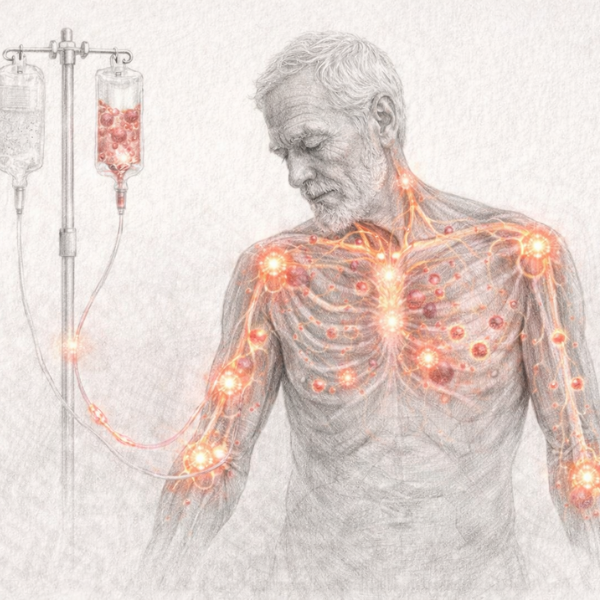
Living cells that interact with your joint biologyMSC therapy delivers millions of living mesenchymal stem cells into your joint. These cells actively engage with the biological environment — modulating inflammation, secreting anti-inflammatory cytokines, producing chondroprotective compounds, and reprogramming inflammatory immune cells.
MSCs are living biology, not a substance. They don't just lubricate — they address the inflammatory cascade and immune dysfunction that drive osteoarthritis progression. They respond to signals from your body and adapt their activity accordingly.
The core difference: Hyaluronic acid addresses the symptom of poor joint lubrication. MSC therapy addresses the underlying biology — the inflammation, immune dysregulation, and cartilage degradation that caused the lubrication to fail in the first place.
Think of It This Way
Hyaluronic acid is like adding oil to a rusty engine.
The engine runs smoother for a while. The squeaking stops. But the rust is still there, still spreading. You'll need more oil every few months. Eventually, the rust wins.
MSC therapy is like sending in a repair crew to address the rust itself.
The crew doesn't just add oil — they work on the corrosion, protect the healthy metal, and create conditions for the engine to function better. The goal isn't just smoother operation today — it's changing what's happening under the hood.
Mechanism Comparison
Understanding what each treatment can and cannot do at a biological level.
What Hyaluronic Acid Does
- Supplements depleted synovial fluid
- Improves joint lubrication and cushioning
- Reduces mechanical friction between surfaces
- Provides mild shock absorption
- May promote minor cartilage/bone health
What It Cannot Do
- ✗ Does not modulate immune response
- ✗ Does not produce anti-inflammatory cytokines
- ✗ Does not reprogram inflammatory cells
- ✗ Does not secrete chondroprotective factors
- ✗ Does not address underlying inflammation
- ✗ Does not adapt to biological signals
What Living MSCs Do
- Modulate inflammatory environment inside joint
- Secrete dozens of anti-inflammatory cytokines
- Reprogram M1 (inflammatory) macrophages to M2 (repair)
- Produce chondroprotective compounds
- Release growth factors supporting tissue repair
- Respond to local biological signals adaptively
- Anti-fibrotic effects on joint tissue
What They Cannot Do
- ✗ Cannot directly lubricate joint surfaces
- ✗ Cannot regrow destroyed cartilage
- ✗ Cannot rebuild severely damaged joints
Complete Comparison
| Hyaluronic Acid (Viscosupplementation) | MSC Stem Cell Therapy (The Stem Cell Club) | |
|---|---|---|
| What it is | Manufactured gel-like substance (inert) | Living mesenchymal stem cells (UC-MSCs) |
| How it works | Supplements depleted synovial fluid; improves lubrication and cushioning | Modulates inflammation, reprograms immune cells, secretes anti-inflammatory and chondroprotective factors |
| What it treats | Symptom: poor joint lubrication | Underlying biology: inflammation, immune dysregulation, cartilage degradation |
| FDA status | FDA-approved as medical device for knee OA | Not FDA-approved for any specific condition |
| Insurance | Often covered (Medicare, many commercial plans) | Not covered by insurance |
| Injections per course | 1–5 injections over 1–5 weeks | Single treatment session |
| Duration of relief | Typically 3–6 months | Studies show sustained benefit at 12+ months; some data at 2–5 years |
| Repeat treatments | Every 6–12 months, indefinitely | Many patients report lasting benefit from single treatment; some opt for annual boosters |
| Best for | Mild-to-moderate OA (KL Grade I–II); primary symptom is mechanical stiffness | Moderate-to-advanced OA (KL Grade II–IV); inflammatory pain; multiple joints; when HA/cortisone insufficient |
| Addresses inflammation | No direct anti-inflammatory mechanism | Yes — multi-pathway anti-inflammatory action through cytokine secretion and immune modulation |
| Procedure time | 5–10 minutes per injection | 30–60 minutes (injection) or 45–90 minutes (IV) |
| Recovery | Minimal; avoid strenuous activity 48 hours | Minimal; 1–2 days for most patients |
| Safety | Generally safe; some reports of local pain, swelling, rare pseudoseptic reactions | Strong safety profile: meta-analysis of 62 RCTs (3,546 patients) — zero serious adverse events |
| Guideline support | Mixed — EULAR recommends; ACR conditionally recommends against; AAOS does not recommend | Not included in current clinical guidelines (emerging therapy) |
| Cost per course | $500–$3,000 without insurance; $20–$200 with insurance | $1,999 all-inclusive at The Stem Cell Club |
The Viscosupplementation Pattern
Many patients come to us after years on this cycle. It's not that HA failed — it's that it was only ever treating one dimension of a multi-dimensional problem.
The Repeating Cycle
What happens when lubrication alone isn't enough
-
1Knee pain → doctor recommends viscosupplementation. Makes sense: your joint fluid is depleted, HA replenishes it. First course goes well — noticeable improvement in stiffness and mobility.
-
2Relief lasts 4–6 months, then fades. The lubrication depletes because the joint environment that degraded it in the first place hasn't changed. The inflammation is still there. The immune dysfunction continues.
-
3Second course: similar relief, maybe slightly less. You're back every 6–12 months. The HA helps with stiffness and mechanical symptoms, but the underlying pain — the inflammatory, aching pain — persists or worsens.
-
4Third, fourth course: diminishing returns. Each course seems to work less or for a shorter duration. The disease is progressing underneath the lubrication. The joint is getting worse while the surface symptom is being temporarily managed.
-
5"HA isn't working anymore. Let's try cortisone." Now you're on the cortisone cycle. Temporary immune suppression. Potential cartilage concerns with repeated use. Another temporary approach to a biological problem.
-
6"We should start discussing surgery." The standard escalation. HA → Cortisone → Surgery. What was never offered: addressing the inflammatory biology driving the disease.
HA didn't fail. It did exactly what it's designed to do — lubricate the joint. But osteoarthritis isn't caused by insufficient lubrication. The lubrication fails because of the inflammatory environment inside the joint. HA treats the result. MSC therapy addresses the cause.
Honest Recommendations
There are situations where HA is the right call, situations where MSC therapy is more appropriate, and situations where combining both may offer the best results.
Try Viscosupplementation First
- → Mild, early-stage OA (KL Grade I–II)
- → Primary symptom is mechanical stiffness, not inflammatory pain
- → Insurance covers HA and cost is a primary concern
- → Haven't tried conservative injectable treatments yet
- → Single joint with minimal systemic inflammation
- → Recent onset, not chronic progressive condition
Combination May Be Optimal
- → Moderate OA with both mechanical and inflammatory symptoms
- → HA helps with stiffness but not with deep aching pain
- → Want biological modulation + mechanical lubrication
- → MSC therapy to address biology, HA for supplemental cushioning
- → Different problems at different levels — complementary approaches
When Biology Is the Problem
- → Moderate-to-advanced OA (KL Grade II–IV)
- → HA provided limited or diminishing relief
- → Primary symptom is inflammatory pain, swelling, warmth
- → Multiple joints affected (systemic inflammation)
- → Autoimmune or chronic inflammatory component
- → Tired of repeating temporary treatments every 6 months
- → Want to address root biology, not just symptom management
Cost Comparison
HA has a significant advantage: insurance coverage. But the full cost picture depends on how many courses you need and how long relief lasts.
Viscosupplementation
With insurance: $20–$200 per injection (copay)
Single-injection brands: $670–$1,200 (Synvisc-One, Monovisc)
Multi-injection series: $800–$3,000+ for 3–5 shots
Repeat schedule: Every 6–12 months
2-year cost (no insurance): $1,500–$9,000+
2-year cost (with insurance): $200–$1,200
MSC Stem Cell Therapy
Includes: Consultation, UC-MSC product, procedure, follow-up
No surprise fees: No lab charges, handling fees, or upgrades
No commissions: Price isn't inflated by sales overhead
Duration: Studies show sustained benefit at 12+ months from single treatment
2-year cost: $1,999 (single treatment)
When Lubrication Isn't Enough
If you've been through multiple HA courses and the relief is fading, here's what's likely happening — and what MSC therapy offers that HA can't.
Why HA Relief Fades
HA depletes because the same inflammatory environment that degraded your natural synovial fluid also degrades the injected HA. You're refilling a leaking bucket without patching the hole. The inflammation persists, the immune dysfunction continues, and the HA breaks down faster each time.
What MSCs Do Differently
MSC therapy addresses the inflammatory environment itself — the reason your natural HA and injected HA keep breaking down. By modulating inflammation, reprogramming immune cells, and changing the biological landscape inside your joint, MSCs aim to change the conditions, not just temporarily buffer them.
🔍 Our Honest Take
Hyaluronic acid is a legitimate, FDA-approved treatment. That's a meaningful distinction. It has decades of clinical use, it's covered by insurance, and for patients with mild, early-stage osteoarthritis, it may provide sufficient relief — especially when the primary symptom is mechanical stiffness.
We believe the evidence favors HA for early-stage disease with predominantly mechanical symptoms. If you haven't tried viscosupplementation and your insurance covers it, it may be worth trying first. If it provides meaningful relief, you may not need MSC therapy at all.
Where HA falls short is the same place every passive, substance-based approach falls short: it doesn't address the underlying biology driving the disease. It lubricates. It cushions. But it doesn't modulate the inflammation, reprogram the immune cells, or protect the cartilage. For patients whose pain is driven more by inflammation than friction — or whose disease has progressed beyond what lubrication can manage — that's a significant limitation.
We should also acknowledge: MSC therapy is not FDA-approved. Guidelines don't yet recommend it. The evidence base, while growing, is younger than the HA literature. Results vary. It won't work for everyone. What we offer is a fundamentally different mechanism — living biology that interacts with your joint environment — for patients who need more than lubrication can provide.
The honest answer for many patients may be that both treatments have a role — HA for mechanical cushioning, MSC therapy for biological modulation. They're not competitors. They solve different problems.
Common Questions
Related Resources
Stem Cells vs. Cortisone →
Compare MSC therapy to corticosteroid injections — suppression vs. modulation and the cartilage question.
Stem Cells vs. PRP →
How platelet-rich plasma compares to living MSCs — growth factors vs. living biology.
Stem Cells vs. Surgery →
The missing middle between cortisone and joint replacement that most patients are never offered.
Is MSC Therapy Right for You?
We'll give you an honest assessment — including whether HA, MSC therapy, or a combination approach makes the most sense for your condition and stage of disease.
Ready for More Than Lubrication?
Living UC-MSCs. $1,999 all-inclusive. Physician-led care. Honest assessment of whether MSC therapy is right for your condition — or whether HA is the better choice.
Schedule Free ConsultationOr call directly: 435-281-2999
Medical Disclaimer: Stem cell therapy is not FDA-approved for the treatment of any specific disease or condition. Hyaluronic acid injections are FDA-approved as medical devices for knee osteoarthritis. The information on this page is for educational purposes and does not constitute medical advice. Results of MSC therapy vary by individual. The Stem Cell Club uses minimally manipulated umbilical cord tissue products from FDA-registered laboratories, handled in compliance with FDA guidelines. Always consult with your physician regarding treatment options appropriate for your condition.
Stem Cell Therapy in Fairhope, Alabama — $1,999
Premium umbilical cord MSC stem cell therapy on the Eastern Shore at a price that makes sense. Same cells other clinics sell for $15,000. No hidden fees. No sales pressure. Just honest medicine.
The Eastern Shore's Premier Stem Cell Clinic
Fairhope's charm is rooted in an active, outdoor lifestyle — fishing Mobile Bay, walking the bluffs, golfing year-round, and enjoying the Gulf Coast. But that beautiful life takes a toll on joints, backs, and bodies over time. Most stem cell clinics in Alabama charge $10,000–$25,000 and hide pricing behind consultations. We don't.
Stem Cell Therapy for the Eastern Shore Lifestyle
From Gulf Coast anglers to weekend golfers, our patients come to us when they want an alternative to surgery and pain medications.
Knee & Joint Pain
Years of Gulf Coast living — fishing, boating, walking the pier — wear down joints. MSC stem cells help reduce inflammation and support natural healing.
Learn moreOsteoarthritis
Humidity and years of activity can accelerate cartilage wear. Umbilical cord MSC therapy can help calm inflammation and support your body's own repair mechanisms.
Learn moreBack Pain
Whether it's from hauling in a catch, swinging a golf club, or just everyday life, back pain is common on the Gulf Coast. Stem cells target inflammation in spinal tissues.
Learn moreSports Injuries
From Fairhope Pier running to Orange Beach kayaking, Baldwin County stays active. MSC therapy helps active adults recover faster and stay in the game.
Learn moreWellness & Longevity
Health-conscious Eastern Shore residents use stem cell therapy to reduce systemic inflammation and support long-term vitality as part of their wellness routine.
Learn moreFrailty of Aging
Baldwin County retirees choose MSC therapy to help manage age-related inflammation, support mobility, and maintain the active Gulf Coast lifestyle they love.
Learn moreSame Stem Cells. Different Price.
Why do other Alabama clinics charge $10,000–$25,000? Luxury overhead, commissioned salespeople, and massive markups. We skip all of that.
Your Fairhope Stem Cell Treatment in 4 Steps
Free Consultation
Talk with our team by phone or Zoom. We'll review your health history, discuss your goals, and determine if stem cell therapy is right for your specific situation. About 15 minutes — no pressure, no sales pitch.
Schedule Your Treatment
If approved, book your appointment at our Fairhope clinic at a time that works for you. We'll send prep instructions so you know exactly what to expect.
Receive Your Stem Cells
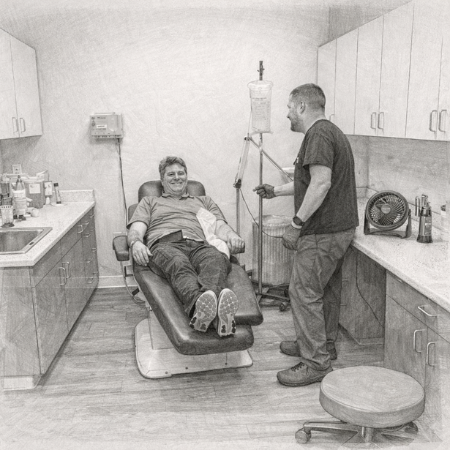
Your MSC stem cell therapy is administered via IV or targeted injection depending on your condition. The procedure takes 1–2 hours in our clinical setting with full physician oversight. Go home same day.
Follow Up & Return
We'll monitor your progress and stay in touch. Most Fairhope members return every 6 months as part of their ongoing wellness plan — making stem cells a routine, not a one-time emergency.
Serving Baldwin County & the Gulf Coast
Our Fairhope clinic is centrally located for patients across the Eastern Shore, Gulf Shores, and the greater Mobile area.
What Eastern Shore Patients Say
Real patients. Real results. Individual outcomes vary.
Individual results vary. These reflect personal experiences, not guaranteed outcomes.
Our Fairhope Clinic
Fairhope, AL
Full address coming soon — call for details
Office Hours
Frequently Asked Questions
Ready to See If Stem Cells Are Right for You?
Schedule a free consultation with our Fairhope team. No pressure, no obligation — just honest answers about whether stem cell therapy makes sense for your situation.
The Eastern Shore Deserves Better Stem Cell Pricing
Join Baldwin County patients who've chosen transparent, physician-guided stem cell therapy at a fair price. Same quality MSCs. No markup games.
Stem cell therapy is not FDA-approved for the diagnosis, treatment, cure, or prevention of any disease. Individual results vary. The information on this page is for educational purposes only and does not constitute medical advice. A consultation with our medical team is required to determine treatment appropriateness.