
Stem Cell Therapy
for Running Injuries
— $1,999
Runner's knee, plantar fasciitis, Achilles tendinopathy, IT band, shin splints — MSC stem cell therapy helps runners heal the injuries that rest alone can't fix. Get back to the miles you love.
Running Injuries Don't Heal on Their Own — Because You Never Actually Stop
Runners are terrible at resting. You know this. You've "taken a week off," felt slightly better, then gone right back to the mileage that caused the problem. The injury never fully resolves because the inflammation cycle never actually completes.
Every footstrike generates 2–3x your body weight in impact force. At 160+ steps per minute, that's thousands of loading cycles per mile. Across 30, 50, or 80+ miles per week — across years and decades — the cumulative damage to tendons, cartilage, fascia, and joints is enormous.
The typical running injury playbook? Rest (lose fitness), ice (temporary), NSAIDs (mask pain while impairing tendon healing), cortisone (weakens tissue), and eventually surgery. Stem cell therapy breaks the cycle by addressing the inflammation that's preventing your body from completing its repair.
The Running Injuries That End Streaks, Seasons, and Careers
Every running injury below shares a root cause: chronic inflammation that won't resolve because the tissue never gets enough recovery time.
Runner's Knee
Patellofemoral pain syndrome — the most common running injury. Pain behind or around the kneecap worsened by downhill running, stairs, and long sits. Chronic inflammation irritates the cartilage surface. MSCs calm this inflammation and support the joint environment.
Plantar Fasciitis
Stabbing heel pain with every first step. The plantar fascia has minimal blood supply, which is why it heals so slowly. MSCs promote blood vessel formation (angiogenesis) and deliver repair signals to tissue that can't heal on its own timeline.
Achilles Tendinopathy
The Achilles absorbs 6–8x your body weight with every stride. Chronic tendinopathy — thickening, pain, morning stiffness — occurs when micro-damage outpaces repair. One of the strongest applications for MSC therapy due to the tendon's poor vascularity.
IT Band Syndrome
Sharp pain on the outside of the knee, especially on downhills. The iliotibial band becomes chronically inflamed where it crosses the lateral femoral condyle. MSCs address the underlying inflammation that foam rolling and stretching can only temporarily relieve.
Shin Splints & Stress Fractures
Medial tibial stress syndrome progresses to stress reactions and fractures when bone remodeling can't keep pace with loading. MSCs support the inflammatory resolution phase and provide signals that help bone and periosteum recover between training cycles.
Hip & Hamstring Issues
Proximal hamstring tendinopathy, hip bursitis, labral irritation, high hamstring pain. Trail runners and ultrarunners are especially prone due to uneven terrain and extreme mileage. MSCs reduce the chronic inflammation driving these persistent injuries.
What MSC Stem Cells Do for Running Injuries
Running injuries persist because your body can't finish repairing before you load the tissue again. MSCs accelerate the repair cycle.
Break the Inflammation Cycle
Running creates a destructive loop: run → microtrauma → inflammation → incomplete healing → run again on damaged tissue → worse inflammation. MSCs are powerful anti-inflammatory agents that help resolve this chronic cycle so healing can actually complete.
Grow New Blood Vessels
Tendons (Achilles, plantar fascia, patellar) have notoriously poor blood supply — the #1 reason running injuries heal so slowly. MSCs release VEGF and other angiogenic factors that stimulate new blood vessel growth, bringing oxygen and nutrients to starved tissue.
Signal Tissue Repair
MSCs release growth factors (PDGF, TGF-β, IGF-1) that coordinate collagen production, tendon repair, and cartilage preservation. This isn't just reducing pain — it's supporting actual structural repair of damaged tissue.
Protect Cartilage
Years of running impact wears down knee and hip cartilage. MSCs create a protective environment that helps slow cartilage degeneration and support what remains — potentially extending your running career by years.
Better Tissue Quality
Scar tissue from repeated injuries is weaker and less elastic than original tissue — a setup for re-injury. MSCs help modulate healing to produce more organized, functional tissue with better mechanical properties for running.
Joint Lubrication
Our products include hyaluronic acid that immediately improves synovial fluid quality in your knees, hips, and ankles. Less friction, better cushioning, smoother movement — noticeable from the first run back.
Runners Rarely Have Just One Problem — That's Why We Recommend the IV
Most runners who come to us don't have a single injury. It's the knee AND the Achilles AND the hip AND the plantar fascia. Years of cumulative mileage create a pattern of interconnected problems. That's why IV therapy is our go-to for runners.
APEX™ IV (Systemic) — 40 million MSCs delivered intravenously address inflammation throughout your entire body — knees, hips, ankles, Achilles, plantar fascia, and spine. One treatment, head-to-toe recovery support. Our top recommendation for high-mileage runners.
APEX™ Injection (Targeted) — For a single specific injury that needs concentrated attention. WJ+ stem cells with BioScaf™ scaffolding injected directly into the Achilles, knee, or plantar fascia. The scaffolding keeps stem cells anchored at the site for months.
The Runner's Protocol — IV for systemic recovery plus a targeted injection at the primary injury site. The most comprehensive option for serious runners.
Cheaper Than a DNS — and a Lot Better for Your Body
Race entries, travel, training plans, coaches, gear — runners invest thousands in their goals. Stem cell therapy at $1,999 protects that entire investment.
From Injury to Start Line — Here's the Plan
Free Consultation
Tell us about your injury, your mileage, and your goals. Training for St. George Marathon? Coming off an ultra? Dealing with chronic plantar fasciitis? We'll give you an honest assessment and a clear recommendation — 15 minutes, no pressure.
Medical Review & Race Calendar Planning
Andrea Montana, MSN, APRN reviews your case and MRI/imaging. We'll time treatment around your training cycle — whether that's before a buildup, during a recovery block, or in the off-season — to maximize both healing and performance.
Treatment Day
1–2 hours in our St. George clinic. IV, injection, or both. Walk out the same day. Cross-train (cycling, swimming, pool running) as early as 3–5 days post-treatment to maintain fitness while the stem cells begin their work.
Return to Running
Easy jogging at 2–3 weeks. Structured training by 4–6 weeks. Optimal results at 2–3 months. Avoid NSAIDs during initial recovery. Many runners report less pain, smoother joints, and the ability to train at volumes they haven't hit in years.
Questions Runners Ask
Tell Us About Your Running Injury
Schedule a free consultation and we'll give you a straight answer — can stem cells help your specific injury, and when should you time it around your training? 15 minutes, no pressure, no sales pitch.
- ✔ Free 15-minute phone or Zoom consultation
- ✔ We understand training cycles and race calendars
- ✔ Honest assessment — we'll tell you if we can't help
- ✔ Know the exact price upfront: $1,999
- ✔ Personalized return-to-running timeline
Learn More
You Were Built to Run — Let's Keep You Running
Thousands of miles on your legs, and thousands more ahead. Give your body the repair signals it needs to keep going. $1,999, all-inclusive. No pressure, no commission — just answers.
Serving St. George • Salt Lake City • Provo • Park City • Las Vegas • Henderson
Stem cell therapy is not FDA-approved for the diagnosis, treatment, cure, or prevention of any disease. Individual results vary. The information on this page is for educational purposes only and does not constitute medical advice. Consult with a qualified healthcare provider before pursuing any treatment. The Stem Cell Club follows all FDA guidelines for minimally manipulated tissue products.
Stem Cell Therapy in Fairhope, Alabama — $1,999
Premium umbilical cord MSC stem cell therapy on the Eastern Shore at a price that makes sense. Same cells other clinics sell for $15,000. No hidden fees. No sales pressure. Just honest medicine.
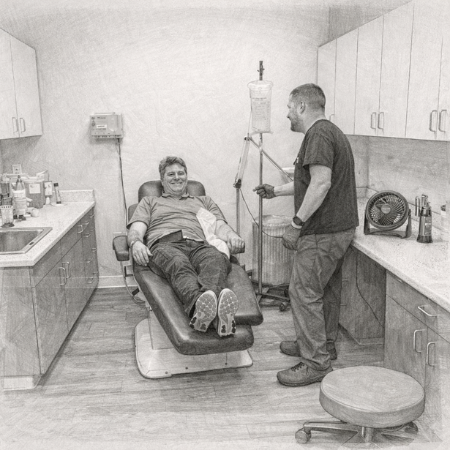
The Eastern Shore's Premier Stem Cell Clinic
Fairhope's charm is rooted in an active, outdoor lifestyle — fishing Mobile Bay, walking the bluffs, golfing year-round, and enjoying the Gulf Coast. But that beautiful life takes a toll on joints, backs, and bodies over time. Most stem cell clinics in Alabama charge $10,000–$25,000 and hide pricing behind consultations. We don't.
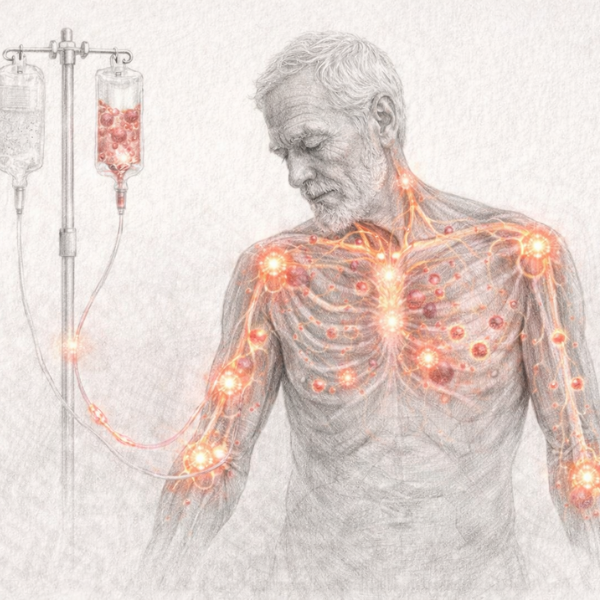
Stem Cell Therapy for the Eastern Shore Lifestyle
From Gulf Coast anglers to weekend golfers, our patients come to us when they want an alternative to surgery and pain medications.
Knee & Joint Pain
Years of Gulf Coast living — fishing, boating, walking the pier — wear down joints. MSC stem cells help reduce inflammation and support natural healing.
Learn moreOsteoarthritis
Humidity and years of activity can accelerate cartilage wear. Umbilical cord MSC therapy can help calm inflammation and support your body's own repair mechanisms.
Learn moreBack Pain
Whether it's from hauling in a catch, swinging a golf club, or just everyday life, back pain is common on the Gulf Coast. Stem cells target inflammation in spinal tissues.
Learn moreSports Injuries
From Fairhope Pier running to Orange Beach kayaking, Baldwin County stays active. MSC therapy helps active adults recover faster and stay in the game.
Learn moreWellness & Longevity
Health-conscious Eastern Shore residents use stem cell therapy to reduce systemic inflammation and support long-term vitality as part of their wellness routine.
Learn moreFrailty of Aging
Baldwin County retirees choose MSC therapy to help manage age-related inflammation, support mobility, and maintain the active Gulf Coast lifestyle they love.
Learn moreSame Stem Cells. Different Price.
Why do other Alabama clinics charge $10,000–$25,000? Luxury overhead, commissioned salespeople, and massive markups. We skip all of that.
Your Fairhope Stem Cell Treatment in 4 Steps
Free Consultation
Talk with our team by phone or Zoom. We'll review your health history, discuss your goals, and determine if stem cell therapy is right for your specific situation. About 15 minutes — no pressure, no sales pitch.
Schedule Your Treatment
If approved, book your appointment at our Fairhope clinic at a time that works for you. We'll send prep instructions so you know exactly what to expect.
Receive Your Stem Cells
Your MSC stem cell therapy is administered via IV or targeted injection depending on your condition. The procedure takes 1–2 hours in our clinical setting with full physician oversight. Go home same day.
Follow Up & Return
We'll monitor your progress and stay in touch. Most Fairhope members return every 6 months as part of their ongoing wellness plan — making stem cells a routine, not a one-time emergency.
Serving Baldwin County & the Gulf Coast
Our Fairhope clinic is centrally located for patients across the Eastern Shore, Gulf Shores, and the greater Mobile area.
What Eastern Shore Patients Say
Real patients. Real results. Individual outcomes vary.
Individual results vary. These reflect personal experiences, not guaranteed outcomes.
Our Fairhope Clinic
Fairhope, AL
Full address coming soon — call for details
Office Hours
Frequently Asked Questions
Ready to See If Stem Cells Are Right for You?
Schedule a free consultation with our Fairhope team. No pressure, no obligation — just honest answers about whether stem cell therapy makes sense for your situation.
The Eastern Shore Deserves Better Stem Cell Pricing
Join Baldwin County patients who've chosen transparent, physician-guided stem cell therapy at a fair price. Same quality MSCs. No markup games.
Stem cell therapy is not FDA-approved for the diagnosis, treatment, cure, or prevention of any disease. Individual results vary. The information on this page is for educational purposes only and does not constitute medical advice. A consultation with our medical team is required to determine treatment appropriateness.