
Stem Cell Therapy vs.
Joint Replacement Surgery.
Told you need a knee or hip replacement? Maybe you do. But maybe there's a step between cortisone and surgery that nobody mentioned — and it might be worth trying first.
We're not anti-surgery. Joint replacement saves lives and restores mobility for millions. But not everyone who's told they need surgery actually needs it right now.
The "Missing Middle" in Joint Treatment
For most patients, the treatment ladder looks like this. Notice anything missing between steps 3 and 4?
The Standard Treatment Ladder for Joint Pain
What most orthopedists present as your options
Most patients jump straight from "cortisone isn't working" to "let's schedule surgery" — without ever being told there's a minimally invasive, regenerative option worth trying first. MSC therapy doesn't replace surgery. It fills the gap between temporary fixes and permanent alterations, and if it doesn't provide adequate relief, surgery remains fully available.
Two Fundamentally Different Approaches
Remove & Replace
Joint replacement surgery (arthroplasty) removes the damaged surfaces of your joint — the cartilage, bone, and surrounding tissue — and replaces them with metal and medical-grade plastic prosthetic components.
It is a proven, well-established procedure. Over 90% of patients experience significant pain relief, and modern prosthetics can last 15-25+ years. Approximately 790,000 knee replacements are performed in the US each year.
However, it is major surgery requiring general or spinal anesthesia, 1-3 days hospitalization, and 3-6 months of recovery with extensive physical therapy. Your natural joint is permanently gone. The procedure is irreversible.
Support & Preserve
MSC (mesenchymal stem cell) therapy introduces living umbilical cord-derived cells that work to change the environment inside your existing joint — modulating inflammation, producing chondroprotective factors, and supporting your body's repair processes.
It is a same-day outpatient procedure. No general anesthesia. No hospitalization. No surgical incision. No physical therapy required. Most patients return to normal activities within 1-2 days.
The goal is to preserve your natural joint — to improve the environment inside it enough to reduce pain, improve function, and potentially delay or avoid the need for replacement. If it doesn't work adequately, surgery is still fully available.
Side-by-Side Breakdown
| Joint Replacement Surgery | MSC Stem Cell Therapy | |
|---|---|---|
| What It Does | Removes damaged joint surfaces and replaces with prosthetic components | Introduces living cells to modulate inflammation, protect cartilage, and support repair |
| Invasiveness | Major surgery — general/spinal anesthesia, surgical incision, bone removal | Minimally invasive — injection or IV, local anesthetic, no incision |
| Hospitalization | 1–3 days hospital stay | None — same-day outpatient procedure, go home after |
| Procedure Time | 1–3 hours surgery + pre/post-op time | 30–60 minutes total |
| Recovery Time | 3–6 months. Walker/cane for weeks. No driving for 6+ weeks. Full recovery 6–12 months. | 1–2 days to resume normal activities. No walker, no cane, no driving restrictions. |
| Physical Therapy | Required — months of PT is essential to successful outcome | Not required — no surgical damage to rehabilitate |
| Pain Level | Significant post-surgical pain for weeks. Opioid pain management common. | Mild discomfort at injection site for 1–2 days. OTC pain relief sufficient. |
| Surgical Risks | Infection (<2%), blood clots, anesthesia complications, nerve damage, implant loosening | Minimal — meta-analysis of 62 RCTs, 3,546 patients: zero serious adverse events |
| Reversibility | Irreversible — natural joint permanently removed. Cannot undo. | Does not alter joint. Surgery remains fully available if needed later. |
| Success Rate | Over 90% report significant pain relief for severe end-stage arthritis | 60–80% report meaningful improvement for mild to moderate conditions |
| Best For | Severe, end-stage joint destruction (KL Grade IV). Complete bone-on-bone. | Mild to moderate damage (KL Grade I-III). Remaining cartilage present. |
| Duration of Results | Prosthetics last 15–25+ years. May need revision surgery eventually. | Clinical studies show 12+ month improvement. 5-year data available. Optional maintenance. |
| Natural Joint | Natural joint removed permanently. Replaced with metal and plastic. | Natural joint preserved. Aims to improve existing joint environment. |
| Cost | $30,000–$70,000+ total. Usually covered by insurance (OOP $3,000–$7,000+). | $10K–$25K most clinics. $1,999 at The Stem Cell Club. Not covered by insurance. |
| Work/Life Disruption | Significant — 4–8+ weeks off work. Need home modifications. Caregiver support required. | Minimal — most patients return to work next day. No home modifications needed. |
What Recovery Actually Looks Like
This is often the deciding factor. The difference in life disruption between these two approaches is enormous.
Surgery Recovery Timeline
- Day 0 Surgery (1–3 hours). General or spinal anesthesia. Hospital admission.
- Days 1–3 Hospital stay. IV pain medication. Begin assisted standing/walking.
- Weeks 1–2 Home recovery. Walker or cane. Significant pain and swelling. Cannot drive.
- Weeks 3–6 Physical therapy 2–3x per week. Gradually increasing mobility. Still limited.
- Weeks 6–12 Cleared to drive. Resuming light activities. Ongoing PT.
- Months 3–6 Continued improvement. Most daily activities resumed. Some restrictions remain.
- Months 6–12 Full recovery. Maximum improvement achieved.
Stem Cell Recovery Timeline
- Day 0 Procedure (30–60 min). Local anesthetic. Walk out. Drive home.
- Days 1–2 Mild soreness at injection site. Resume normal activities. OTC pain relief if needed.
- Weeks 1–2 Back to full routine. Some patients notice early improvements.
- Weeks 2–6 Results begin to build. Inflammation modulation underway. Gradual improvement.
- Months 2–3 Most patients notice meaningful changes in pain and function.
- Months 3–6 Optimal results window. Continued improvement as MSCs do their work.
- Months 6–12+ Sustained improvement. Results build and maintain over time.
Stem Cells vs. Surgery in Clinical Studies
Head-to-head comparisons are rare in this space, but the available evidence is telling.
Key Studies Comparing Approaches
Published in peer-reviewed medical journals
Hernigou et al. — 12-Year Follow-Up (30 Patients, Same-Patient Comparison)
30 patients with bilateral knee OA received knee replacement on one side and stem cell therapy on the other — during the same procedure. At 12-year follow-up: pain relief was equivalent between both groups. However, 6 of 30 surgical knees needed revision surgery versus only 1 in the stem cell group. Thrombophlebitis occurred in 15% of surgical knees versus 0% with cell therapy.
MSC Knee OA Meta-Analysis — Sustained Improvement
Across multiple RCTs, intra-articular MSC therapy showed a large treatment effect (SMD -1.35) at 12 months for knee OA, with improvement in cartilage quality documented on MRI. Patients showed 65–78% improvement in pain and function scores by one year — comparable to outcomes reported for surgical intervention in moderate OA.
Orozco et al. — MSC Cartilage Improvement on MRI
12 patients treated with MSC injections for chronic knee OA showed a 27% average decrease in poor cartilage areas on MRI, with 11 of 12 patients demonstrating improved cartilage quality. Researchers concluded MSC therapy may be a valid alternative that doesn't require hospitalization or surgery.
Surgery Success Data — 90%+ for Severe Arthritis
Joint replacement has decades of proven outcomes, with over 90% of patients experiencing significant pain relief for end-stage (Grade IV) arthritis. For completely destroyed joints, surgery remains the gold standard. These success rates apply to patients who are appropriate surgical candidates — not all patients with joint pain.
MSC Safety Meta-Analysis — 62 RCTs, 3,546 Patients
Comprehensive review found zero serious adverse events attributable to MSC therapy. Compare this to surgical complication rates: infection (~2%), blood clots, anesthesia reactions, implant loosening, nerve damage, and a 10-20% revision rate over 15-25 years.
Who Is a Candidate for Each?
This is the most important question. Both treatments work — but for different populations and different severity levels.
Good Candidates for Stem Cell Therapy
- → Mild to moderate joint damage (KL Grade I-III)
- → Still have some remaining cartilage (not uniformly bone-on-bone)
- → Cortisone has stopped working or is less effective
- → Want to try preserving natural joint before committing to replacement
- → Cannot afford the recovery time of surgery (work, family obligations)
- → Surgical risk factors (age, health conditions, anesthesia concerns)
- → Younger patients wanting to delay replacement as long as possible
- → Multiple joints affected (surgery on both knees at once is uncommon)
- → Want to explore non-surgical option before an irreversible procedure
Better Candidates for Joint Replacement
- → Severe, end-stage joint destruction (KL Grade IV)
- → Complete bone-on-bone throughout the joint
- → Significant structural deformity (bowlegged, knock-kneed)
- → Joint instability that can't be corrected non-surgically
- → Failed regenerative therapy (tried MSC/PRP without adequate relief)
- → Severely limited mobility affecting quality of life
- → Good overall health and ready for surgical recovery
- → Have insurance coverage for surgical costs
The Full Financial Picture
The sticker prices are very different. But the full cost story includes insurance, recovery time, lost wages, and long-term implications.
Joint Replacement Surgery
MSC Therapy at The Stem Cell Club
Trying MSC Therapy Doesn't Burn Any Bridges
The Most Important Thing to Understand
Unlike surgery, which permanently removes your natural joint, MSC therapy is not an either/or decision. It's a low-risk step you can take before committing to an irreversible procedure.
- → If MSC therapy works well — you've avoided major surgery, preserved your natural joint, and can enjoy the results for years. Many patients find they no longer need surgery at all, or delay it significantly.
- → If MSC therapy provides partial relief — you still benefit from reduced pain and improved function, and you've bought time for your natural joint. Surgery remains available whenever you choose.
- → If MSC therapy doesn't provide adequate relief — nothing has been lost. Your joint is unchanged. You haven't delayed surgery in a harmful way. You proceed to replacement with the knowledge that you explored every option first.
- → If you have surgery first? — your natural joint is permanently gone. You can't go back. There's no opportunity to try a conservative approach. This is why the sequence matters.
🔍 An Honest Note About Surgery & Stem Cells
We are not anti-surgery. Joint replacement is one of the most successful procedures in modern medicine. For patients with truly destroyed joints — complete, uniform bone-on-bone contact, significant structural deformity, or severe instability — surgery is often the best and most predictable path to pain relief.
What we believe is that surgery should be the last step, not the first option presented when cortisone stops working. Too many patients are fast-tracked to joint replacement when their imaging shows moderate damage — not the severe, end-stage destruction that replacement is designed for.
MSC stem cell therapy is not FDA-approved for any specific condition. Results vary. It will not regrow a completely destroyed joint, and it is not a guaranteed alternative to surgery. But for the right candidate — someone with remaining cartilage and a desire to preserve their natural joint — it represents a reasonable, evidence-supported step worth exploring before making an irreversible decision.
If we review your imaging and believe surgery is the better path for your specific situation, we'll tell you. We'd rather lose a patient to the right recommendation than gain one by overpromising what MSC therapy can do.
Common Questions About Stem Cells vs. Surgery
Related Resources
Targeted Injections →
How MSC injections deliver cells directly to your joint — the treatment most comparable to what surgery addresses.
Stem Cells vs. Cortisone →
Already on the cortisone cycle? Compare cortisone injections to MSC therapy and understand when to transition.
Arthritis Treatment →
Detailed information on MSC therapy for osteoarthritis — the condition that drives most joint replacements.
Get an Honest Second Opinion
Tell us about your condition, what your surgeon is recommending, and what your imaging shows. We'll give you an honest assessment of whether MSC therapy is worth trying before surgery — or if surgery is genuinely the better path for you. No pressure either way.
Before You Schedule Surgery.
If you've been told you need a joint replacement, you owe it to yourself to explore every option first. A free consultation costs you nothing. Surgery costs you your natural joint — permanently.
Schedule Free ConsultationOr call directly: 435-281-2999
Medical Disclaimer: Stem cell therapy is not FDA-approved for the treatment of any specific disease or condition. The information on this page is for educational purposes only and does not constitute medical advice. Results vary by individual. Joint replacement surgery is a well-established, proven medical procedure — this page is not intended as advice to refuse or delay surgery against your orthopedic surgeon's recommendation. Always consult your physician before making any treatment decisions. The Stem Cell Club uses minimally manipulated umbilical cord tissue products handled in compliance with FDA guidelines.
Stem Cell Therapy in Fairhope, Alabama — $1,999
Premium umbilical cord MSC stem cell therapy on the Eastern Shore at a price that makes sense. Same cells other clinics sell for $15,000. No hidden fees. No sales pressure. Just honest medicine.
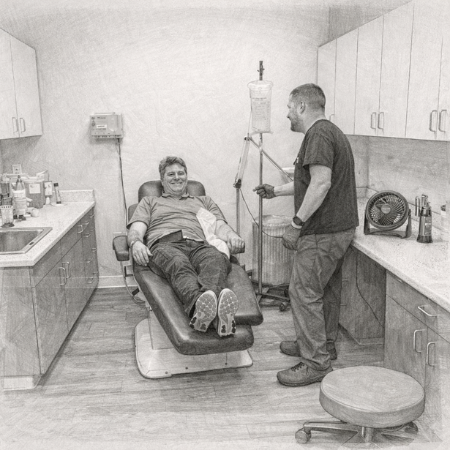
The Eastern Shore's Premier Stem Cell Clinic
Fairhope's charm is rooted in an active, outdoor lifestyle — fishing Mobile Bay, walking the bluffs, golfing year-round, and enjoying the Gulf Coast. But that beautiful life takes a toll on joints, backs, and bodies over time. Most stem cell clinics in Alabama charge $10,000–$25,000 and hide pricing behind consultations. We don't.
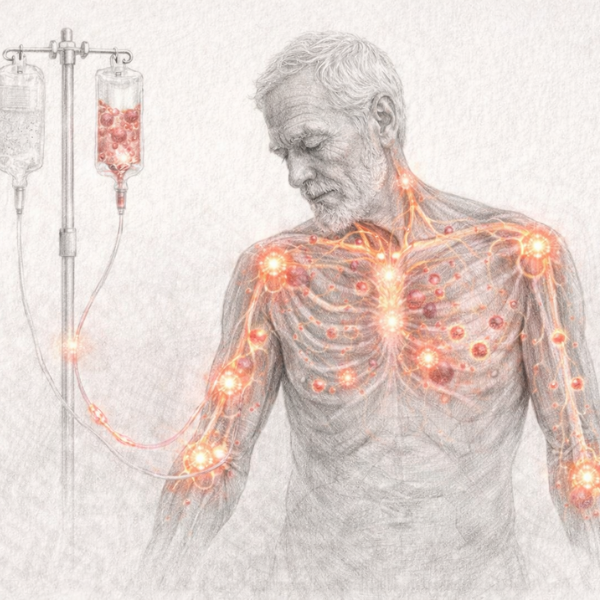
Stem Cell Therapy for the Eastern Shore Lifestyle
From Gulf Coast anglers to weekend golfers, our patients come to us when they want an alternative to surgery and pain medications.
Knee & Joint Pain
Years of Gulf Coast living — fishing, boating, walking the pier — wear down joints. MSC stem cells help reduce inflammation and support natural healing.
Learn moreOsteoarthritis
Humidity and years of activity can accelerate cartilage wear. Umbilical cord MSC therapy can help calm inflammation and support your body's own repair mechanisms.
Learn moreBack Pain
Whether it's from hauling in a catch, swinging a golf club, or just everyday life, back pain is common on the Gulf Coast. Stem cells target inflammation in spinal tissues.
Learn moreSports Injuries
From Fairhope Pier running to Orange Beach kayaking, Baldwin County stays active. MSC therapy helps active adults recover faster and stay in the game.
Learn moreWellness & Longevity
Health-conscious Eastern Shore residents use stem cell therapy to reduce systemic inflammation and support long-term vitality as part of their wellness routine.
Learn moreFrailty of Aging
Baldwin County retirees choose MSC therapy to help manage age-related inflammation, support mobility, and maintain the active Gulf Coast lifestyle they love.
Learn moreSame Stem Cells. Different Price.
Why do other Alabama clinics charge $10,000–$25,000? Luxury overhead, commissioned salespeople, and massive markups. We skip all of that.
Your Fairhope Stem Cell Treatment in 4 Steps
Free Consultation
Talk with our team by phone or Zoom. We'll review your health history, discuss your goals, and determine if stem cell therapy is right for your specific situation. About 15 minutes — no pressure, no sales pitch.
Schedule Your Treatment
If approved, book your appointment at our Fairhope clinic at a time that works for you. We'll send prep instructions so you know exactly what to expect.
Receive Your Stem Cells
Your MSC stem cell therapy is administered via IV or targeted injection depending on your condition. The procedure takes 1–2 hours in our clinical setting with full physician oversight. Go home same day.
Follow Up & Return
We'll monitor your progress and stay in touch. Most Fairhope members return every 6 months as part of their ongoing wellness plan — making stem cells a routine, not a one-time emergency.
Serving Baldwin County & the Gulf Coast
Our Fairhope clinic is centrally located for patients across the Eastern Shore, Gulf Shores, and the greater Mobile area.
What Eastern Shore Patients Say
Real patients. Real results. Individual outcomes vary.
Individual results vary. These reflect personal experiences, not guaranteed outcomes.
Our Fairhope Clinic
Fairhope, AL
Full address coming soon — call for details
Office Hours
Frequently Asked Questions
Ready to See If Stem Cells Are Right for You?
Schedule a free consultation with our Fairhope team. No pressure, no obligation — just honest answers about whether stem cell therapy makes sense for your situation.
The Eastern Shore Deserves Better Stem Cell Pricing
Join Baldwin County patients who've chosen transparent, physician-guided stem cell therapy at a fair price. Same quality MSCs. No markup games.
Stem cell therapy is not FDA-approved for the diagnosis, treatment, cure, or prevention of any disease. Individual results vary. The information on this page is for educational purposes only and does not constitute medical advice. A consultation with our medical team is required to determine treatment appropriateness.