
Stem Cell Therapy
vs. Cortisone Shots.
One suppresses your symptoms temporarily. The other aims to change the environment inside your joint. If you've been on the cortisone cycle — or are about to start — here's what you should know first.
Cortisone has its place. We're not here to demonize it. But you deserve the full picture before committing to repeated injections.
Two Very Different Approaches
Symptom Suppression
Cortisone is a synthetic corticosteroid — a powerful anti-inflammatory drug injected directly into your joint. It works by suppressing your immune system's inflammatory response at the injection site.
The result is rapid pain relief, often within days. But the effect is temporary — typically lasting 1 to 4 weeks, sometimes a few months. The underlying condition doesn't change. When the cortisone wears off, the pain returns because nothing has been done to address the environment inside your joint.
Cortisone has been a standard treatment for decades and is widely available through orthopedic and primary care offices, often covered by insurance.
Regenerative Support
MSC (mesenchymal stem cell) therapy introduces living cells — specifically, umbilical cord-derived MSCs — that actively work to change the environment inside your joint.
Instead of suppressing inflammation with a drug, MSCs modulate your immune response naturally — reprogramming inflammatory cells, secreting dozens of anti-inflammatory and regenerative factors, and producing chondroprotective compounds that shield your remaining cartilage from further degradation.
The goal isn't to mask the pain temporarily. It's to create conditions that support your body's own repair processes and provide lasting improvement.
Suppression vs. Modulation
This is the most important distinction. Cortisone and MSCs both reduce inflammation — but through completely different mechanisms with very different long-term implications.
Cortisone Approach: Suppress
- → Blocks inflammatory pathways with synthetic steroid
- → Broadly suppresses immune activity at injection site
- → Provides rapid but temporary pain relief
- → Wears off completely — requires repeat injections
- → Does not repair, protect, or regenerate tissue
- ⚠ Research concerns: may impair cartilage repair mechanisms and inhibit matrix synthesis with repeated use
- ⚠ Can cause temporary blood sugar spikes (especially for diabetic patients)
- ⚠ Recommended limit: 3-4 injections per joint per year
MSC Approach: Modulate & Support
- + Reprogram inflammatory macrophages to anti-inflammatory state
- + Secrete dozens of anti-inflammatory cytokines naturally
- + Produce chondroprotective factors — actively shield cartilage
- + Support tissue repair through paracrine signaling
- + Improve synovial (joint fluid) environment
- + Anti-fibrotic effects — reduce scar tissue formation
- + Clinical studies show sustained improvement at 12+ months
- + No systemic steroid side effects, no injection frequency limits
The Cartilage Question
One of the biggest concerns about cortisone is its long-term effect on joint cartilage. Here's what peer-reviewed research has found.
Key Studies on Cortisone & Joint Cartilage
Published in peer-reviewed medical journals
JAMA 2017 — McAlindon et al. (Landmark RCT)
Patients receiving triamcinolone injections every 3 months for 2 years showed greater cartilage volume loss than the saline placebo group, with no significant improvement in knee pain over the treatment period.
Radiology 2025 — RSNA (Osteoarthritis Initiative)
Even a single corticosteroid injection was associated with significantly greater structural joint damage over 2 years compared to hyaluronic acid. Researchers noted corticosteroids can impair cartilage repair mechanisms and inhibit matrix synthesis.
ESSKA 2024 — Preclinical Systematic Review
Found dose- and time-dependent effects on cartilage: beneficial at low doses and short durations, but detrimental effects at high doses and longer durations of use — including cartilage thinning, matrix fibrillation, and reduced proteoglycan concentration.
EFORT 2024 — Meta-Analysis
Cortisone injections provided clinically relevant benefit compared to placebo only at short-term follow-up. At longer follow-up periods, benefits were inferior or non-superior to other injectable options including PRP.
Felson 2022 — Commentary on Long-Term Safety
Argued that measured cartilage loss was small (0.055mm per year) and may not be clinically significant. However, acknowledged that repeated injections over many years compound this effect.
Knee OA Meta-Analyses — MSC vs. Standard of Care
Meta-analyses of MSC therapy for knee OA show sustained improvement in pain and function scores at 12+ months. Unlike cortisone, MSCs produce chondroprotective factors that aim to preserve rather than potentially degrade cartilage.
The Cortisone Cycle
If this pattern feels familiar, you're not alone. Most of our patients have lived through some version of it.
How the Cortisone Cycle Typically Unfolds
A pattern that millions of joint pain patients recognize
Cortisone → diminishing returns → more cortisone → eventual surgery recommendation. Nothing in between addresses the actual joint environment.
MSC therapy aims to break this cycle by changing the environment inside your joint — modulating inflammation, protecting remaining cartilage, and supporting repair. A fundamentally different approach before considering surgery.
Side-by-Side Breakdown
| Cortisone Injection | MSC Stem Cell Therapy | |
|---|---|---|
| What It Contains | Synthetic corticosteroid drug (e.g. triamcinolone). No living cells, no growth factors. | Living mesenchymal stem cells — young, potent UC-MSCs with full regenerative capability. |
| How It Works | Suppresses inflammatory pathways with a drug | Modulates immune response naturally with living biology + supports tissue repair |
| Goal | Temporary pain relief through inflammation suppression | Change the joint environment to support repair and lasting improvement |
| Duration of Relief | Typically 1-4 weeks; sometimes up to a few months. Diminishes with repeated use. | Clinical studies show sustained improvement at 12+ months; 5-year follow-up data available |
| Effect on Cartilage | Concerns: may impair cartilage repair and inhibit matrix synthesis. Greater cartilage loss found in landmark RCT. | Chondroprotective — produces factors that shield remaining cartilage from degradation |
| Anti-Inflammatory | Strong but temporary; broad suppression of immune activity | Multi-pathway, sustained modulation — reprograms immune cells rather than suppressing them |
| Tissue Repair | None — cortisone does not repair tissue. May impair natural repair mechanisms. | Active support via paracrine signaling, growth factor secretion, anti-fibrotic effects |
| Frequency Needed | Every 3-6 months; limited to 3-4 per joint per year | Single treatment; optional maintenance every 6-12 months |
| Diminishing Returns? | Yes — effectiveness often decreases with repeated injections | Not reported in clinical studies |
| Systemic Side Effects | Blood sugar spikes, facial flushing, temporary immune suppression, potential skin thinning | Minimal — meta-analysis of 62 RCTs (3,546 patients) found zero serious adverse events |
| Cost Per Injection | $100-$300 without insurance; often covered by insurance ($20-$50 copay) | $10,000-$25,000 most clinics $1,999 at The Stem Cell Club |
| Annual Cost | $80-$1,200+ (3-4 injections/year plus office visits) | $1,999 single treatment at The Stem Cell Club |
| Insurance Coverage | Usually covered | Not covered |
| Systemic Option? | No — local injection only (oral steroids are different) | Yes — IV delivery available for systemic conditions |
When Each Treatment Makes Sense
Cortisone has a legitimate role in joint pain management. So does MSC therapy. The question is what's right for your situation.
Cortisone
May Be Appropriate
- → Acute flare-up needing fast relief
- → First-time joint pain (diagnostic tool)
- → Short-term bridge before surgery
- → Insurance-covered option needed
- → Occasional, infrequent use (1-2x/year)
- → Mild condition not requiring regenerative approach
Consider Both
Depends on Goals
- → Moderate OA with periodic flares
- → First regenerative treatment consideration
- → Cortisone still providing adequate relief
- → Weighing short-term cost vs. long-term approach
MSC Therapy
Likely Better
- → Cortisone stopped working / diminishing returns
- → Concerned about cartilage effects of repeated cortisone
- → Moderate to severe OA
- → Want to address the environment, not just mask pain
- → Trying to delay or avoid joint replacement
- → Multiple joints or systemic inflammation
- → Seeking longer-lasting results
The Honest Math on Price
Cortisone is cheaper per injection — especially with insurance. But the full picture includes frequency, duration, and what happens when it stops working.
Cortisone Injections
MSC Therapy at The Stem Cell Club
When Cortisone Stops Working
Ready to Break the Cortisone Cycle?
If your cortisone injections are lasting shorter and working less, that doesn't mean you're out of options. It means the temporary approach has run its course, and your joint needs something fundamentally different.
- → Completely different mechanism — MSCs don't just suppress inflammation. They modulate your immune response, produce chondroprotective factors, and support tissue repair. It's not "stronger cortisone." It's a different category of treatment.
- → Protects instead of potentially degrading — While research raises concerns about cortisone's effect on cartilage, MSC therapy is chondroprotective. The biological direction is fundamentally opposite.
- → No diminishing returns — Cortisone's effectiveness decreases with repeated use. MSC therapy doesn't follow this pattern in clinical studies.
- → Timing note: We typically recommend waiting 2-4 weeks after your last cortisone injection before MSC therapy, as residual corticosteroids can potentially affect MSC viability. We'll help you plan the transition.
🔍 An Honest Note About Both Treatments
We want to be fair about cortisone: it has a legitimate place in medicine. For acute flare-ups, diagnostic purposes, and short-term bridge therapy, cortisone can be exactly the right tool. We don't believe every patient should skip cortisone entirely — sometimes fast, affordable relief is the priority.
What we question is the cycle — repeated injections over years with diminishing returns, while the underlying joint environment continues to deteriorate. The research on cartilage effects is concerning but not universally conclusive, and the debate among orthopedists is ongoing.
MSC stem cell therapy is not FDA-approved for any specific condition. Results vary. It won't regrow a completely destroyed joint. But for patients caught in the cortisone-to-surgery pipeline, it offers a fundamentally different approach that aims to support the joint rather than just suppress symptoms. We'll give you an honest assessment of whether it makes sense for your specific situation.
Common Questions About Cortisone vs. Stem Cells
Related Resources
Targeted Injections →
How MSC injections deliver cells directly to your affected joint — the most direct comparison to cortisone.
Stem Cells vs. PRP →
How MSC therapy compares to another popular regenerative option — platelet-rich plasma injections.
Arthritis Treatment →
Detailed information on stem cell therapy specifically for osteoarthritis — the most common reason people get cortisone.
Schedule Your Free Consultation
Tell us about your condition, how many cortisone injections you've had, and what your current doctor is recommending. We'll give you an honest second opinion on whether MSC therapy makes sense for your situation.
Beyond the Cortisone Cycle.
If your cortisone shots have stopped working — or you want to start with a regenerative approach instead — we're here to help. Honest answers, $1,999 all-inclusive, zero sales pressure.
Schedule Free ConsultationOr call directly: 435-281-2999
Medical Disclaimer: Stem cell therapy is not FDA-approved for the treatment of any specific disease or condition. The information on this page is for educational purposes only and does not constitute medical advice. Results vary by individual. Cortisone injections are a standard medical treatment with established guidelines — this page is not intended as advice to discontinue cortisone against your doctor's recommendation. Always consult your physician before making any treatment decisions. The Stem Cell Club uses minimally manipulated umbilical cord tissue products handled in compliance with FDA guidelines.
Stem Cell Therapy in Fairhope, Alabama — $1,999
Premium umbilical cord MSC stem cell therapy on the Eastern Shore at a price that makes sense. Same cells other clinics sell for $15,000. No hidden fees. No sales pressure. Just honest medicine.
The Eastern Shore's Premier Stem Cell Clinic
Fairhope's charm is rooted in an active, outdoor lifestyle — fishing Mobile Bay, walking the bluffs, golfing year-round, and enjoying the Gulf Coast. But that beautiful life takes a toll on joints, backs, and bodies over time. Most stem cell clinics in Alabama charge $10,000–$25,000 and hide pricing behind consultations. We don't.
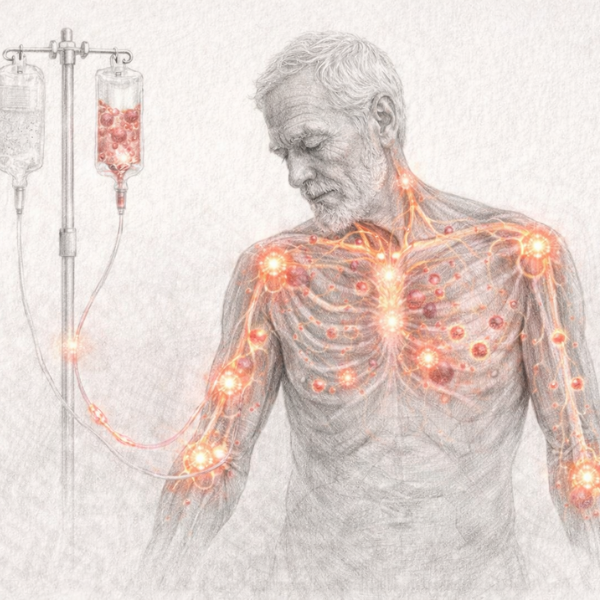
Stem Cell Therapy for the Eastern Shore Lifestyle
From Gulf Coast anglers to weekend golfers, our patients come to us when they want an alternative to surgery and pain medications.
Knee & Joint Pain
Years of Gulf Coast living — fishing, boating, walking the pier — wear down joints. MSC stem cells help reduce inflammation and support natural healing.
Learn moreOsteoarthritis
Humidity and years of activity can accelerate cartilage wear. Umbilical cord MSC therapy can help calm inflammation and support your body's own repair mechanisms.
Learn moreBack Pain
Whether it's from hauling in a catch, swinging a golf club, or just everyday life, back pain is common on the Gulf Coast. Stem cells target inflammation in spinal tissues.
Learn moreSports Injuries
From Fairhope Pier running to Orange Beach kayaking, Baldwin County stays active. MSC therapy helps active adults recover faster and stay in the game.
Learn moreWellness & Longevity
Health-conscious Eastern Shore residents use stem cell therapy to reduce systemic inflammation and support long-term vitality as part of their wellness routine.
Learn moreFrailty of Aging
Baldwin County retirees choose MSC therapy to help manage age-related inflammation, support mobility, and maintain the active Gulf Coast lifestyle they love.
Learn moreSame Stem Cells. Different Price.
Why do other Alabama clinics charge $10,000–$25,000? Luxury overhead, commissioned salespeople, and massive markups. We skip all of that.
Your Fairhope Stem Cell Treatment in 4 Steps
Free Consultation
Talk with our team by phone or Zoom. We'll review your health history, discuss your goals, and determine if stem cell therapy is right for your specific situation. About 15 minutes — no pressure, no sales pitch.
Schedule Your Treatment
If approved, book your appointment at our Fairhope clinic at a time that works for you. We'll send prep instructions so you know exactly what to expect.
Receive Your Stem Cells
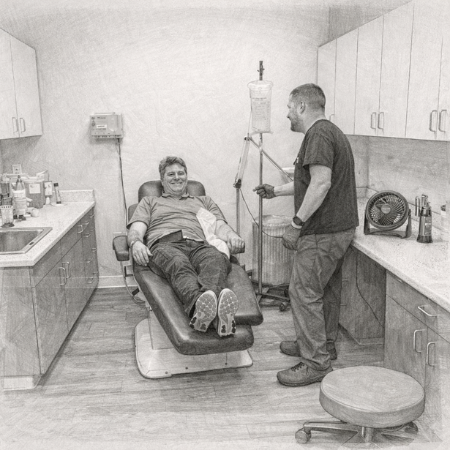
Your MSC stem cell therapy is administered via IV or targeted injection depending on your condition. The procedure takes 1–2 hours in our clinical setting with full physician oversight. Go home same day.
Follow Up & Return
We'll monitor your progress and stay in touch. Most Fairhope members return every 6 months as part of their ongoing wellness plan — making stem cells a routine, not a one-time emergency.
Serving Baldwin County & the Gulf Coast
Our Fairhope clinic is centrally located for patients across the Eastern Shore, Gulf Shores, and the greater Mobile area.
What Eastern Shore Patients Say
Real patients. Real results. Individual outcomes vary.
Individual results vary. These reflect personal experiences, not guaranteed outcomes.
Our Fairhope Clinic
Fairhope, AL
Full address coming soon — call for details
Office Hours
Frequently Asked Questions
Ready to See If Stem Cells Are Right for You?
Schedule a free consultation with our Fairhope team. No pressure, no obligation — just honest answers about whether stem cell therapy makes sense for your situation.
The Eastern Shore Deserves Better Stem Cell Pricing
Join Baldwin County patients who've chosen transparent, physician-guided stem cell therapy at a fair price. Same quality MSCs. No markup games.
Stem cell therapy is not FDA-approved for the diagnosis, treatment, cure, or prevention of any disease. Individual results vary. The information on this page is for educational purposes only and does not constitute medical advice. A consultation with our medical team is required to determine treatment appropriateness.